Most container plants don't die of neglect. They die of kindness — a small splash every morning, poured with the best intentions, until the roots have nothing left to breathe with. Watering a pot is not the same as watering a garden bed. Roots are trapped in a small volume of compost, with no subsoil to drain into and no earthworms to repair the structure. Whatever you pour in stays there until it evaporates or runs out of the bottom.
The encouraging part is that the mistakes are predictable. Learn to spot the seven below in your own routine and container gardening becomes far more forgiving. You will also spend less time guessing and more time enjoying the plants.
1. Overwatering: the mistake hiding in plain sight
Overwatering is rarely a single flood. It is usually frequency: a little water every day, so the compost never dries out enough for air to return. Roots need oxygen as much as moisture. When they sit in saturated soil, they suffocate, rot, and stop functioning — which is why an overwatered plant wilts in exactly the same way as a thirsty one.
Look for yellowing lower leaves, soft or dark stems at the soil line, a sour smell from the pot, or fungus gnats hovering around the surface. The cure is not a rigid schedule but a quick check before every watering:
- Finger test: push a finger into the compost up to the second knuckle. If it feels cool and damp, wait a day or two.
- Lift the pot: wet compost is heavy, dry compost is surprisingly light. Once you know a pot's dry weight, this becomes the fastest test of all.
- Check the drainage hole: damp, dark compost at the base suggests the lower layer is staying wet too long.
- Look, don't just touch: a bone-dry surface with a slightly shrunken gap from the pot wall means the root ball needs a proper soak, not a sprinkle.
2. Drainage is more than a hole in the bottom
A pot without drainage holes is a bucket, and few plants enjoy living in a bucket. If a decorative container has no holes, use it as a cachepot and keep the plant in a plain nursery pot inside, lifting it out to water. Empty the cachepot afterwards.
Skip the old advice about a layer of crocks or gravel in the base. In a normal-sized pot, gravel simply raises the waterlogged zone closer to the roots. What matters is a free-draining mix — something loose that holds together when squeezed but breaks apart easily, with grit or perlite through it. Garden soil in a pot turns to brick, so keep it for the borders.
Small details help: pot feet lift the base off a saucer or patio so water can escape, and a pot placed flat on paving with a blocked hole will sit wet for weeks. If the compost has compacted into a solid block, repot into fresh mix rather than watering more often in an attempt to compensate.
3. Watering by the calendar instead of by the plant
Sunday morning is a convenient time to water. It is a terrible instruction to follow for every pot on the shelf. A terracotta pot in full sun may need water daily in July and nothing for a fortnight in December. A glazed pot in shade, packed with mature roots, can behave in the opposite way. Small pots dry out far faster than large ones, and a plant in active growth drinks more than one that has paused.
Weather, light, air movement, pot material and the size of the root ball all shift the answer. So use your finger and the weight of the pot as the instruction, and treat the calendar as a reminder to check, not to pour.
4. Saucers and standing water
A saucer protects the floor and makes watering easier, but it becomes a problem when the pot sits in the run-off for days. Roots at the base of the pot stay permanently wet, which is exactly the condition that causes rot. Water until it flows out of the drainage hole, then empty the saucer twenty or thirty minutes later.
A layer of pebbles under the pot doesn't solve it either, since the water still evaporates into the same enclosed space. Bottom watering — standing the pot in a tray of water for a while — can work well, especially for plants that dislike wet foliage, but set a timer and remove the pot once the surface feels damp. Don't leave it to drink overnight.
5. The quick splash that never reaches the roots
Peat-based composts can become water-repellent when they dry out completely. Water poured on top then races down the gap between the root ball and the pot wall, out of the hole, and down the drain, while the middle stays dry as dust. The plant looks watered and keeps wilting.
The fix is patience: trickle water slowly across the surface, wait a minute, then do it again, giving the compost time to absorb each pass. For a badly dried-out pot, stand the whole thing in a basin of water up to its rim for half an hour, then let it drain thoroughly. Loosening the crusty top layer with a fork also helps water penetrate instead of running off.
6. Bad timing: night, noon, and the leaf-scorch myth
Morning is the best time for most containers. Plants have the day to take up water, any splashes on the leaves dry quickly, and less is lost to evaporation than at midday. Evening watering is not fatal, but wet foliage sitting through cool, still hours is an invitation to mildew and leaf spot.
The familiar warning about droplets acting as magnifying lenses in full sun is overstated, and you needn't panic if you water at noon. Still, in the heat of a summer afternoon much of the water evaporates before it reaches the roots, so a morning routine simply gets more of it to where it matters.
7. Watering the leaves instead of the soil
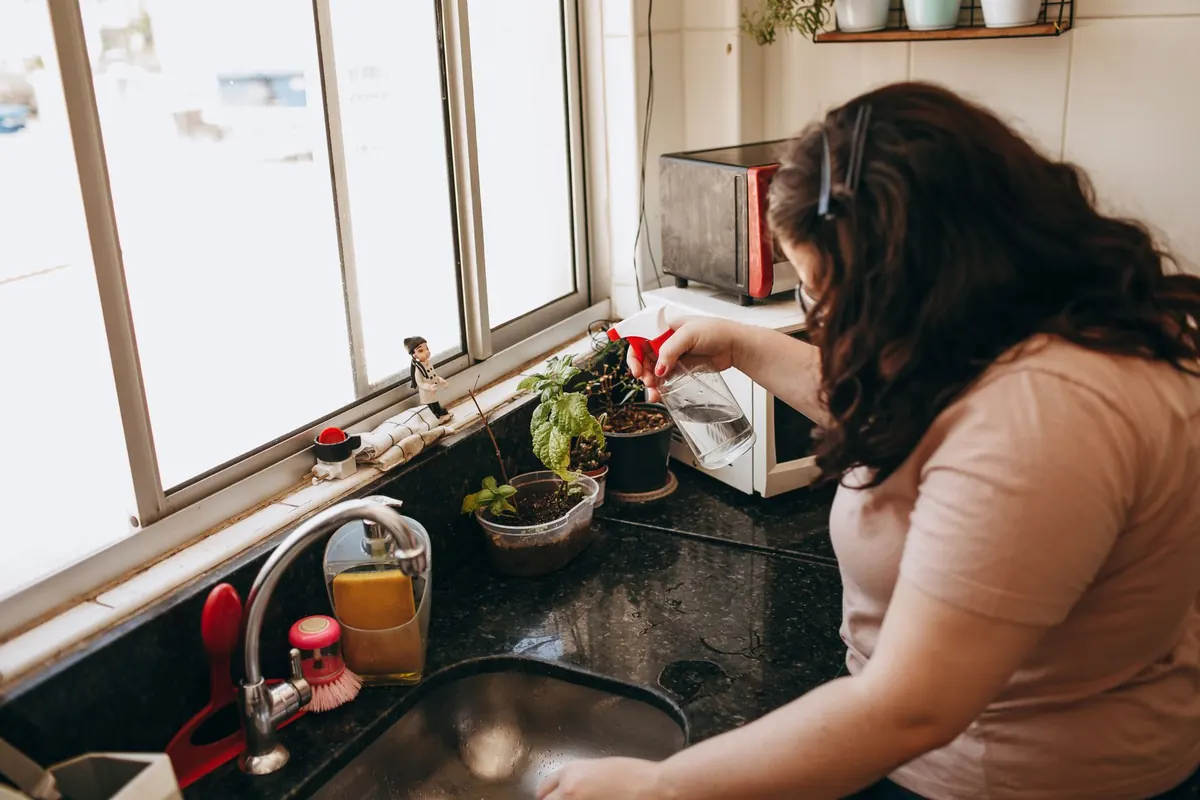
A shower from a watering can feels generous, but most of it lands on the foliage and very little reaches the root ball. Aim the spout at the compost, under the canopy, and water the whole surface rather than one spot near the stem.
Some plants are actively unhappy about wet leaves — African violets, begonias, and many fuzzy-leaved subjects can develop pale spots or rot where water sits. Others simply don't need it. If you want to raise humidity, group pots together or use a tray of damp pebbles beside them rather than routinely soaking the leaves.
A five-minute watering routine that works
- Check each pot with a finger, or by weight, before pouring anything.
- Water slowly and thoroughly until it runs from the drainage hole.
- Return twenty minutes later and empty every saucer.
- Lift the pot to confirm it feels heavier, then leave it alone until the top layer begins to dry.
- Once a month, look under the pot, feel the base of the compost, and clear any blocked holes.
Watering well is mostly a matter of watching. Ten seconds of checking saves a plant far more often than a new gadget or a different fertiliser. Get the moisture right and almost everything else in a container garden becomes easier.
Photo: Helena Lopes / Pexels