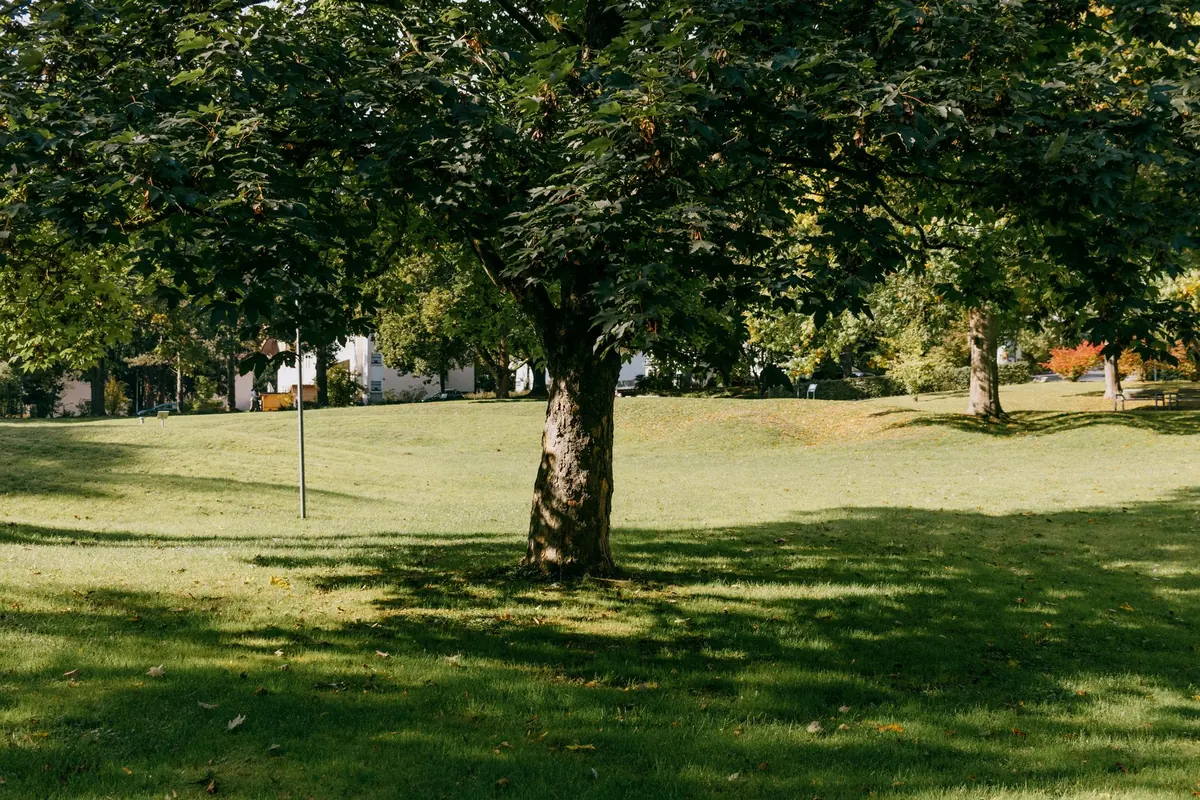
A lawn does not usually fail under a tree because the grass is lazy. It fails because the light, soil and traffic in that spot are working against it. Shade reduces photosynthesis, tree roots pull moisture and nutrients from the same ground, and soil often stays cooler and wetter than the rest of the lawn. The result is a thin, patchy surface that looks worse every season. The good news is that many shaded patches can be improved—not by throwing down more seed and hoping, but by diagnosing the problem and giving the new grass a fair start.
Read the shade before you sow
Start by watching the area through a full day in spring or summer. Check it in the morning, at midday and in late afternoon. Note how many hours of direct sun reach the soil, not just the tops of the blades. A lawn that receives three or four hours of direct sun is very different from one under dense evergreen branches. Dappled light through a deciduous tree is also different from the deep, dry shade beside a wall.
Look at what is growing there now. Moss, algae and liverwort suggest prolonged dampness, compaction or low light. Bare soil under a thirsty tree may point to root competition. A patch that is worn in the same place every week may be a traffic problem rather than a shade problem. Dog urine, mower scalping and heavy clay can all mimic shade damage. If the spot is dark for most of the day and stays damp, no lawn seed will turn it into a bowling green. In that case, plan for a shade-tolerant grass in the brighter edges and a groundcover or planted bed in the deepest section.
Prepare the soil, not just the seedbed
New grass needs contact with soil, air and moisture. Rake away dead leaves, fallen twigs and loose thatch, but do not scalp the existing lawn to the soil. Mow the area slightly lower than usual, then scarify lightly if the surface is matted. If the ground is compacted, core aeration will do more for the patch than another bag of seed. On heavy soil, aerating in two directions and brushing a thin layer of compost into the holes improves the root zone without burying the crowns of existing grass.
Topdress with no more than a quarter-inch of fine compost or lawn dressing. More than that can smother the grass you are trying to save. Fill small dips with a sandy topdressing mix so water does not collect in the new seed. Around trees, keep mulch and soil away from the trunk and avoid deep cultivation that damages surface roots. If the soil is very wet, improve drainage before seeding; grass seed that sits in a puddle will rot. A simple soil test can tell you whether lime or nutrients are needed, but do not add fertilizer blindly just because the grass looks weak.
Choose grass that actually tolerates shade
Seed labels matter. A bargain mix often contains annual ryegrass or species that germinate quickly and then fade in shade. Look for a blend described for shaded lawns and suited to your climate. In cool-season areas, fine fescues are the first group to consider. Creeping red fescue, hard fescue and sheep fescue tolerate shade and lower fertility, though they establish slowly and dislike heavy traffic. Tall fescue is more durable and has deeper roots, but it is coarser and needs more moisture. Perennial ryegrass can help quick cover, but it is less reliable in deep shade.
- Fine fescue blends: good for dappled shade, dry shade and low-input lawns.
- Tall fescue: useful where the shaded lawn also gets foot traffic, but choose a shade-tolerant cultivar.
- Perennial ryegrass: a quick nurse grass in a blend, not the main answer for dense shade.
- Warm-season grasses: some tolerate light shade in mild climates, but most need strong sun to knit together.
Use a blend rather than a single species. Different grasses germinate at different speeds and handle varying moisture, which gives the patch a better chance. Check the percentage of pure live seed and the sowing rate on the label, then buy enough to cover the area twice if you plan to sow in two directions.
Overseed thinning patches in the right order
For cool-season grasses, early autumn is usually the best window: the soil is still warm, the air is cooler and weed pressure is lower. Spring sowing can work, but it demands more watering as summer arrives. Warm-season grasses are best seeded in late spring or early summer, when soil temperatures are reliably high.
- Mow the patch lower than normal, then remove clippings and debris.
- Rake or scarify to expose small patches of soil without tearing out healthy grass.
- Core aerate compacted areas and brush in a thin compost topdressing.
- Apply the seed at the label rate, splitting the amount and sowing in two directions.
- Rake very lightly so the seed sits in the top quarter-inch of soil, then tamp or roll gently.
- Water with a fine spray until the surface is moist but not running off.
Do not bury the seed. A light dusting of soil or compost is enough; a thick blanket will smother it. Keep off the patch while it germinates, and protect it from pets with a temporary wire hoop or light netting if needed.
Aftercare makes or breaks the repair
The first two weeks are about moisture. Keep the top inch of soil consistently damp, which may mean a light misting in the morning and again at midday on warm days. Avoid heavy watering that pools or washes seed into the corners. Once the seedlings are up and have been mown once, begin watering less often but more deeply, encouraging roots to go down. Morning watering is better than evening watering because it lets the leaf dry before night.
Mow only when the new grass reaches about three inches, and use a sharp blade. Remove no more than one-third of the height at a time. Keep the mower set higher in shaded areas—around three to four inches—so each blade catches more light. Leave the clippings to return nutrients. Wait until the new grass has been mown two or three times before applying a light starter feed, and follow the product label. Do not use weed-and-feed or selective weedkillers on young seedlings; the damage is difficult to undo.
Manage trees, traffic and expectations
Shade changes as trees grow. Selective pruning of lower branches can let in more light, but major pruning should be done at the right time for the tree and, for large limbs, by a qualified arborist. Do not remove healthy branches simply to chase a lawn. If the area is a natural path, accept a curved stepping-stone route or a mulch border instead of fighting the traffic. Fallen leaves should be cleared gently from new seedlings, not raked with force.
Expect the patch to improve over two seasons, not two weeks. Overseed the thinnest areas again the following autumn. If a spot remains bare after soil preparation, correct seeding and a full growing season, the light level is probably below what lawn grass can handle. Convert it to a low shade bed with ferns, hostas, hellebores or liriope, and keep the lawn for the brighter edges. That is not a defeat; it is a better use of the ground.
A realistic repair plan for shaded patches
Measure the shade, fix the surface, choose a proper shade blend and sow when the grass can establish without heat stress. Water patiently, mow high, keep traffic off the new seed and repeat the overseeding where it is still thin. A shaded lawn will rarely be as dense as a lawn in full sun, but with the right grass and a little restraint, it can become green, even and far less patchy than it was.
Photo: Arlind D / Pexels